
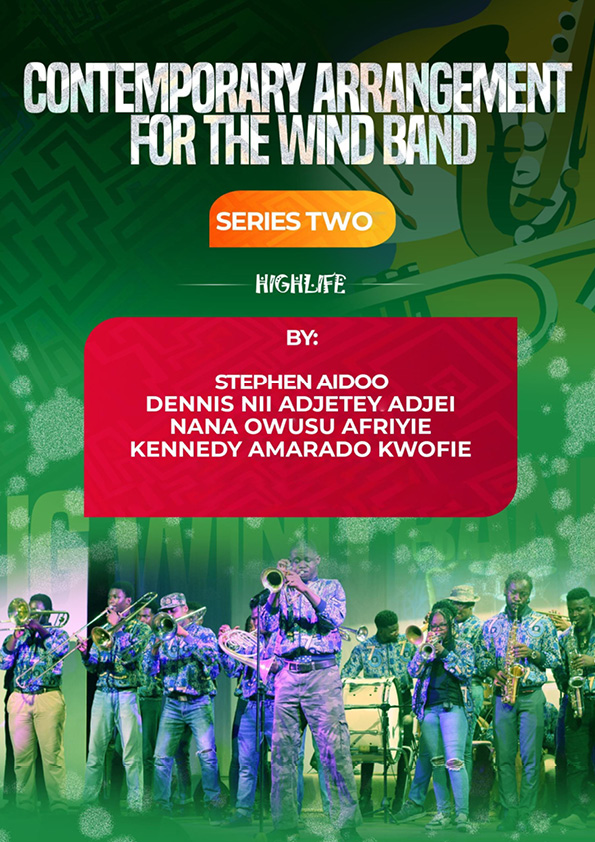
Contemporary Arrangement for the Wind Band (Series 2)
Authors: STEPHEN AIDOO, NANA OWUSU AFRIYIE, KENNEDY AMARADO KWOFIE, DENNIS NII ADJETEY ADJEI
ISBN 978–9988–9531–8–8
DOI: 10.38159/npub.eb202601
Published: 21st January, 2026.
This project has been deeply shaped by my extensive experience with the Wind Ensemble of the Department of Music at the University of Ghana, where I currently serve as the director. Throughout my tenure, I have consistently encouraged students to explore a wide range of musical genres through the wind band performance, understanding the importance of expanding their musical horizons. A central aim of this initiative has been to highlight the significant role that “Brass Band Music” play in community music in Ghana. This insight has influenced our approach to song selection, emphasizing the importance of choosing music that resonates with the community’s interests and encourages active participation through singing along. Previously, the wind band’s repertoire was heavily focused on classical music, which, while appreciated by some, had limited appeal to the broader community. Recognizing this, I deemed it essential to incorporate a variety of community music into our repertoire, enabling us to better serve and connect with our audience.
Since adopting this approach, the band has been exceptionally well-positioned to serve both the university and the wider community. Our versatility has allowed us to contribute meaningfully to various university programs that require community engagement. A prime example is our participation in university graduation ceremonies, where “brass band music” has become a key element, allowing graduates to release stress and dance in celebration of their achievements. Another significant event in which the wind band plays a crucial role is the annual “United Nation International Day of Older Persons” organized by Centre for Aging Studies University of Ghana to celebrate elderly members of the community. During this event, the band performs well-known old tunes, evoking fond memories for the aged participants and encouraging them to dance as a form of exercise.
Additionally, the university frequently utilizes the wind band for floats and workout sessions, fostering community exercise and engagement. This initiative aligns closely with the University of Ghana’s 2024-2029 strategic plan, which emphasizes transformative student experiences. By connecting students to the music industry and focusing on community and contemporary music alongside classical repertoire, we provide a unique opportunity for students to gain practical, industry-relevant experience. When the department received a grant from the Mellon Foundation to revitalize Ghanaian highlife music, the wind band seized the opportunity to score and rearrange selected highlife pieces for performance at the project’s Grand Finale. This endeavour not only showcased the band’s versatility but also provided a platform for students to explore and contribute to the preservation and evolution of Ghana’s musical heritage.
The leadership of the band has consistently used these opportunities to nurture creativity in students through arrangement and performance. This approach has resulted in wonderful arrangements that reflect both the traditional roots and contemporary innovations in Ghanaian music. This project represents a significant shift in the wind band’s focus and methodology, emphasizing community engagement, musical diversity, and student development. By bridging the gap between academic music education and community musical traditions, we have created a more inclusive and dynamic musical environment that serves both educational and cultural purposes.
Stephen Aidoo, (PhD)
Department of Music (SPA)
University of Ghana,
Legon
In the vibrant tapestry of Ghanaian music, Highlife stands as a testament to the nation’s rich cultural heritage and creative spirit. As one of the most significant musical genres to emerge from West Africa, Highlife has evolved over the decades, adapting to new influences while remaining deeply rooted in its traditional origins. It is a genre that transcends mere entertainment; it reflects the social, political, and emotional landscapes of the communities it represents.
The book you hold in your hands, Contemporary Arrangements for Wind Band (Series Two – Highlife), is a ground-breaking contribution to music education and performance. It brings together the rhythmic complexity, melodic richness, and cultural significance of Highlife in a format that is accessible to wind bands, allowing musicians to experience and interpret this genre in new and exciting ways.
This collection of arrangements not only honours the legacy of Highlife but also showcases its adaptability in contemporary contexts. It invites musicians and audiences alike to engage with the vibrant sounds of Ghana, bridging cultural divides and fostering a deeper understanding of the music that has shaped generations.
As you explore the pages of this book, you will find meticulously crafted arrangements that capture the essence of Highlife while providing opportunities for creative expression and collaboration. Each piece serves as a reminder of the power of music to unite people, celebrate diversity, and inspire future generations of musicians.
I commend the authors and contributors for their dedication to preserving and promoting Highlife in this innovative format. I hope that this book will not only enrich the wind bands’ repertoire but also ignite a passion for Highlife among musicians and audiences around the world.
May this work serve as a bridge between tradition and innovation, inspiring countless performances and fostering a lasting appreciation for the beautiful genre of Highlife.
Professor Mark-Millas Fish (PhD)
Associate Professor of Music
Head, Department of Music Education
University of Education, Winneba
November 9th, 2025
Wayaaya. …………………………….. 1
Aban Nkaba………………………….. 28
Alome………………………………….. 53
Day by Day……………………………. 99
Nkebo Baaya…………………………. 108
M’awerekyekyere …………………… 127
Medo Wo …………………………….. 148

Aidoo, Stephen , Dennis Nii Adjetey Adjei , Nana Owusu Afriyie and Kennedy Amarado Kwofie. Contemporary Arrangement for the Wind Band.(Accra: Noyam, 2026).